📑 Table of Contents
- Why Health Calculators Are Worth Using
- Body Composition: More Than a Number on the Scale
- BMI, Lean BMI, and the Navy Body Fat Method
- Body Type and Body Shape: Understanding Your Build
- Nutrition Calculators: Calories, Protein, and Hydration
- Calorie Needs — Including for Breastfeeding Moms
- Protein Intake and the Protein-Creatinine Ratio
- Daily Water Intake and Total Body Water
- Fitness Tracking: Heart Rate, Steps, and Fitness Age
- Heart Rate Zones and ECG-Based Calculations
- Sleep Calculators: Tracking Cycles and Sleeping Debt
- Pregnancy and Reproductive Health
- How These Calculators Work Together
- Frequently Asked Questions
The CDC says only 24% of American adults meet both aerobic and muscle-strengthening guidelines, not because people are unwilling , but because most folks are moving without steady data. Free fitness calculators fix that. They turn your height, weight, age, and daily habits into clear, doable numbers, right away, no cost, and no appointment needed. This page pulls together 10 health and fitness calculators for body composition, nutrition, water balance, cardiovascular health, sleep, and pregnancy. Each tool stands on its own , but they also work better as a kinda linked setup. Getting a read on where you are in one area almost always hints at something useful in another.
Why Health Calculators Are Worth Using
Tracking health without numbers is guesswork. You might feel like you are eating enough protein, sleeping enough, or drinking enough water but the gap between perception and reality is where most wellness goals fall apart. A reliable health calculator gives you a kind of starting baseline, and a baseline is what makes progress measurable. Kinda straightforward but still important. Research in the Journal of Medical Internet Research found that people using digital health tracking tools are much more likely to make, and then keep, behavioral changes than people who only follow general guidelines. Calculators aren’t a replacement for medical advice, but they can be a real first step toward informed self-management. These tools rely on clinically accepted formulas for calorie estimation they often use the Mifflin-St Jeor equation, for body fat the US Navy method, for sleep they typically map 90-minute cycle intervals, and for training support they run established heart rate zone calculations. The math stays consistent and the results are comparable to what a healthcare provider might compute during an initial consult.
Body Composition: More Than a Number on the Scale
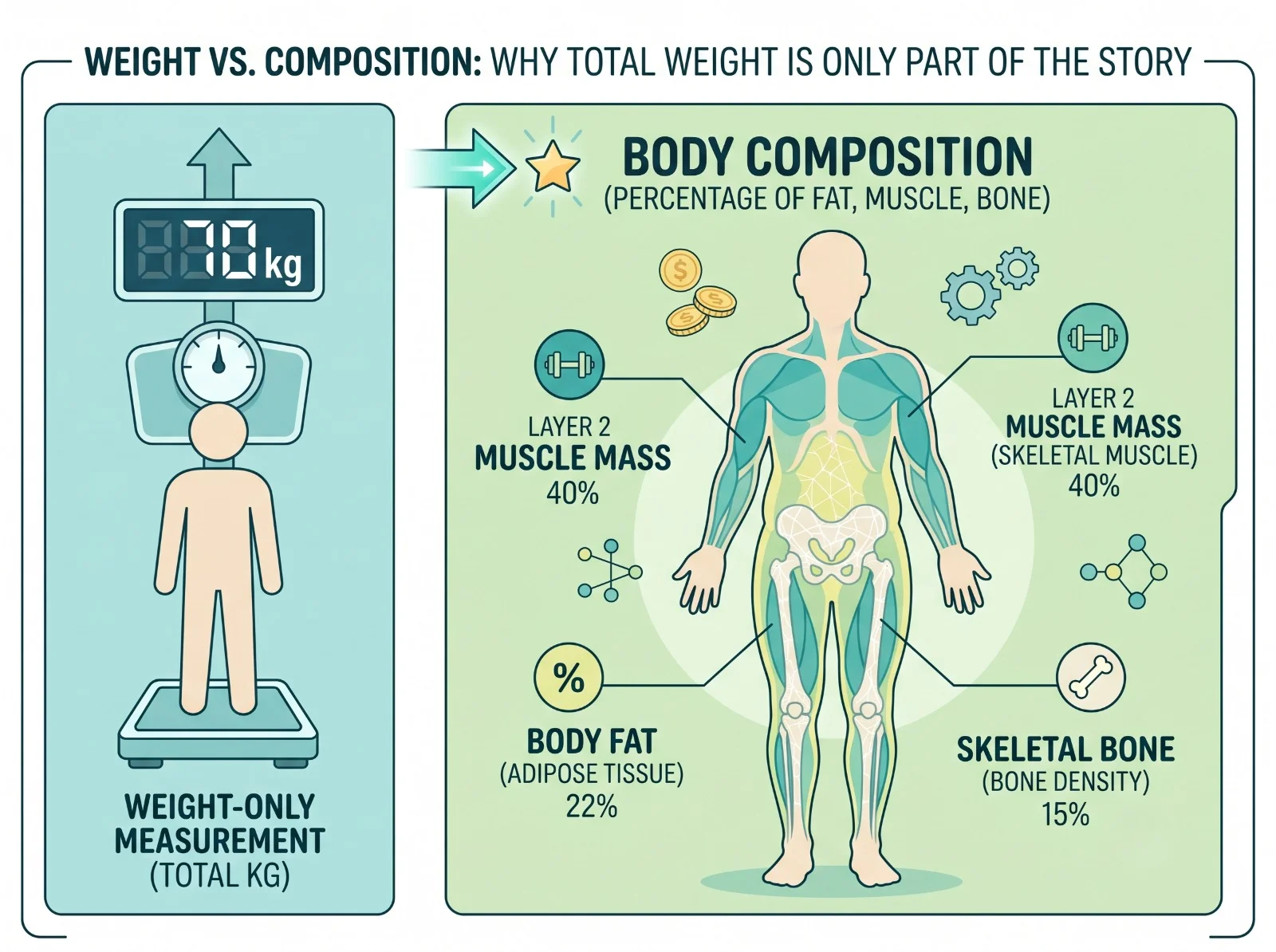
Weight by itself tells you very little. Two people can be the same weight, yet their body composition can be totally different one may carry a higher percentage of fat, while the other has mostly muscle. Body composition calculators give you a sharper, more realistic picture of what your weight actually represents.
BMI, Lean BMI, and the Navy Body Fat Method
A BMI calculator uses your height and weight to estimate whether you fall into an underweight, healthy, overweight, or obese range. It is the most widely used screening tool in primary care but it has known limitations. BMI does not distinguish between fat and muscle, which is why lean BMI and body fat percentage calculations exist alongside it.
The body fat calculator on this site uses the US Navy method, which factors in waist, neck, and hip measurements to estimate fat percentage without any lab work. This approach is validated for general fitness tracking and is the same method used in military fitness assessments often called the BMI for Navy standard. Lean BMI, a related metric, subtracts estimated fat mass to reflect the weight your body carries as muscle, bone, and organ tissue.
Body Type and Body Shape: Understanding Your Build
A body type calculator kinda helps you figure out if you’re an ectomorph (lean and kinda long), mesomorph (more muscular and athletic), or endomorph (broader and rounder) using your measurements. This labeling is usually referred to as somatotyping and it’s meant to show how your body may act with diet and training. For instance, endomorphs often pack on fat a bit easier and many of them do better with lower carbohydrate nutrition plans, not just because it sounds good but because it tends to fit their tendencies.
Then a body shape calculator goes a step farther, it looks at things like shoulder, waist, and hip measurements to spot proportions such as pear, apple, hourglass, rectangle, or inverted triangle. Some people notice that a body shape calculator with shoulders can turn out a little more accurate than one that relies only on waist and hips. Also there’s a body proportions calculator that can tell you whether certain measurements fall inside statistically typical ranges. That part is useful for fitness goal-setting, or even for garment fitting, for those who like the practical angle instead of only the theory. A face shape calculator is a lighter-use tool in the same family it uses facial width and length measurements to identify oval, round, square, heart, or oblong face shapes. A face shape calculator female variant accounts for typical differences in facial structure. While less directly tied to health outcomes, it is one of the more searched body measurement tools online.
Nutrition Calculators: Calories, Protein, and Hydration
What you eat controls a big chunk of your health outcomes, like it’s not even optional. Nutrition calculators help you set specific daily targets based on your body and goals rather than following generic averages that may not apply to you.
Calorie Needs — Including for Breastfeeding Moms
So the calorie calculator figures out your Total Daily Energy Expenditure (TDEE) basically the number of calories your body needs based on your size, age, sex, and activity level. This number, it kinda changes in a real way during different life stages, you know. A calorie calculator for breastfeeding moms, for example, has to include the extra 300–500 calories each day that milk production usually asks for. If you just use a regular TDEE calculator and you don’t adjust for nursing, it can quietly push you into undereating, even if you didn’t mean to. The calorie calculator for nursing moms on this site does those details , and it helps the result match what you truly require.
Protein Intake and the Protein-Creatinine Ratio
The protein intake calculator kind of works out how many grams of protein you might need each day, based on your weight and where you’re at with fitness goals. In general, you’ll see guidance from about 0.8g per kilogram if you’re mostly sedentary, and up to roughly 1.6–2.2g per kilogram for people who are actively building muscle or something close to that.
There’s also this other thing, the protein creatinine ratio calculator, sometimes called the urine protein creatinine ratio calculator, which is used more in clinical settings to screen for possible kidney function problems. If your protein intake runs high and you’d like to keep an eye on kidney health beside it, that ratio (from a urine sample) gives a standardized signal, so you don’t have to do a 24-hour urine collection, which is… annoying, honestly.
Daily Water Intake and Total Body Water
The water intake calculator sets a more personalized hydration goal, using body weight, your climate, and how active you are. The usual “8 glasses a day” idea is basically an over-simplified average, so it’s not that exact for everyone, because real needs can shift a lot depending on the person and circumstances. A 90kg person exercising in heat needs significantly more water than a 55kg sedentary adult.
Total body water calculation goes a step further it estimates how much of your body mass is water, which varies by age, sex, and body composition. A body water weight calculator uses standard Watson or Hume equations to produce this estimate. The water potential calculator addresses a related concept from cell biology the movement of water across membranes useful for students and healthcare professionals working with fluid balance equations.
Fitness Tracking: Heart Rate, Steps, and Fitness Age
Heart Rate Zones and ECG-Based Calculations
The heart rate calculator determines your maximum heart rate and five training zones based on age. Training in the right zone matters more than most people realize — fat burning, aerobic conditioning, and anaerobic threshold training each require different intensity levels. Exercising too hard or too easy consistently produces much slower results than zone-targeted training.
A heart rate ECG calculator — used in clinical and advanced fitness contexts — translates electrocardiogram intervals into heart rate and rhythm metrics. This is more specialized than a standard cardio calculator but relevant for users managing heart conditions or working with healthcare providers on exercise prescriptions.
A fitness age calculator estimates your cardiovascular fitness relative to your chronological age using VO2 max and activity data. Research from the Norwegian University of Science and Technology found that fitness age is a stronger predictor of longevity than standard BMI — making it one of the more meaningful numbers a free step calculator and heart rate tracker can help you improve over time.
Sleep Calculators: Tracking Cycles and Sleeping Debt
Sleep is one of those parts of physical health people keep under valuing, mostly because it feels “routine.” For adults, 7–9 hours a night is the usual baseline, but whether it actually helps you recover is tied to how well it matches natural 90-minute sleep cycles.

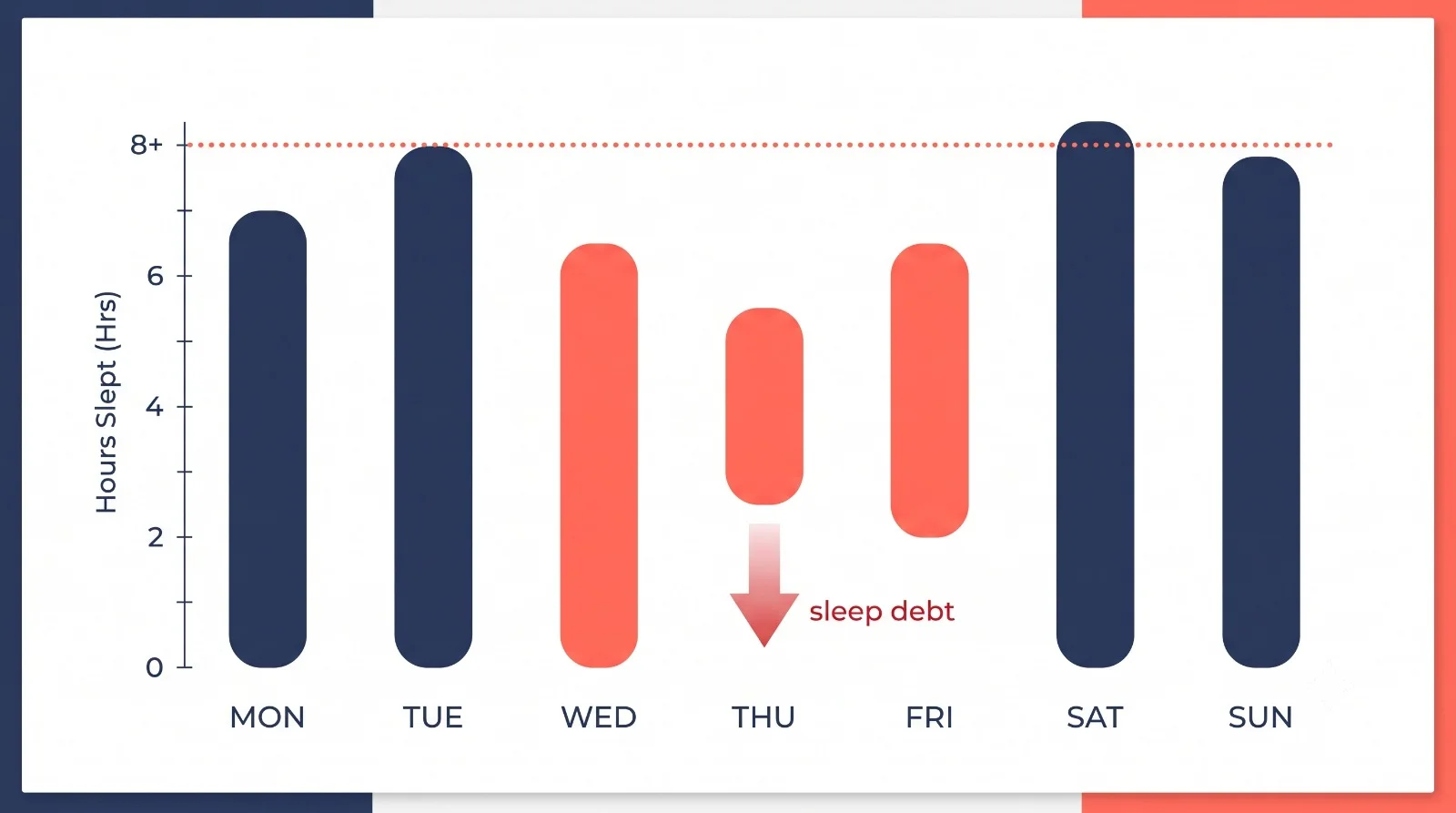
A sleep calculator helps you spot the best moment to fall asleep, or when to wake up, so you finish whole cycles instead of getting pulled out mid cycle. If you wake in the middle, you get that groggy, foggy, sort of disconnected feeling that many people blame on being “not a morning person”. Honestly it’s more of a timing mismatch than a personality trait. Figure out your sleep debt by looking at how much you actually slept each night for the last week, then compare that to what you were aiming for. The sleep debt tends to stack up pretty fast, and it really shows up in measurable ways for thinking clarity, metabolism, and your immune response. If you’re short by about 90 minutes every night for five nights, it can end up causing cognitive impairment that’s roughly on par with a full night of sleep deprivation.
Pregnancy and Reproductive Health
A pregnancy due date calculator helps estimate your due date, gestational age, and the key trimester markers using your last menstrual period, or the conception date. Then there’s a reverse pregnancy calculator that flips the process you provide the due date you’re targeting and it estimates when conception most likely happened. There’s also a pregnancy home test calculator that can help you identify the earliest reliable day to take an at-home test, based on how your cycle usually runs.
These tools support smarter planning and help people monitor timelines more accurately before they meet with an OB-GYN. They’re not meant to replace clinical care, but they do answer the immediate questions that pop up between appointments.
How These Calculators Work Together
Health metrics are not isolated. Your body fat percentage affects your lean BMI result. Your TDEE changes when your activity level changes which your heart rate zones help you measure. Your sleep debt affects your appetite and calorie intake. Your hydration level affects physical performance, which in turn affects your heart rate data.
Starting with a BMI calculator and a calorie calculator gives you a body composition and nutrition baseline. Adding a sleep calculator and a water intake calculator builds recovery tracking on top of that. Running a body type calculator and a protein intake calculator helps you tailor your training and diet to your specific physiology. Used together, these free tools give you a data-informed picture of your health that most people only get through multiple professional consultations.
Frequently Asked Questions
Are free online health calculators accurate? Free health calculators use the same standardized formulas found in clinical practice including the Mifflin-St Jeor equation for calories, the US Navy method for body fat, and established heart rate zone calculations. They produce reliable estimates for general health tracking. They are not a substitute for lab tests or medical evaluation, but for setting baselines and monitoring trends, they are sufficiently accurate for most adults.
Which health calculator should I use first? Start with a BMI calculator and a calorie calculator these two give you a body composition baseline and a daily energy target, which together cover the most fundamental aspects of weight and nutrition management. From there, add a body fat calculator if you want a more detailed body composition picture, and a sleep calculator if rest quality is a concern.
Can a calorie calculator account for breastfeeding? Yeah, so a calorie calculator that’s made for breastfeeding moms kind of includes that extra 300–500 calories a day, because milk production usually asks for it, on top of your usual TDEE. If you instead use a generic calorie calculator, it can end up underestimating what you actually need, and for nursing mothers that matters more than people think, it might mess with milk supply or slow down maternal recovery, a little. Just keep in mind: it’s smart to double-check any very specific nutrition needs with a healthcare provider or a registered dietitian, especially during pregnancy and lactation.