📑 Table of Contents
Freddie Mac’s Primary Mortgage Market Survey, kinda shows that the average 30-year fixed mortgage rate in the US sat somewhere between 6% and 7.5% across 2024 and rolling into 2025. And if you check a $350,000 home where you put 10% down, then the difference between a 6.5% and a 7.0% rate comes out to about $100 a month, and that ends up being roughly $36,000 across the whole loan life. You honestly can’t just pick a lender without running those numbers first, because otherwise you’re basically guessing. It’s probably the only realistic way to tell if a payment really lands inside your budget, and which offer is actually the better deal, not the one that just sounds nicer. This free mortgage calculator helps estimate your monthly house payment using the loan amount, interest rate, and loan term. It also includes adjustable rate mortgages, biweekly payment schedules, reverse mortgages, manufactured home loans, extra payment approaches, and recasting those more specific cases, that most mortgage tools either skip, or explain in a weird way.
What Goes Into a Mortgage Payment
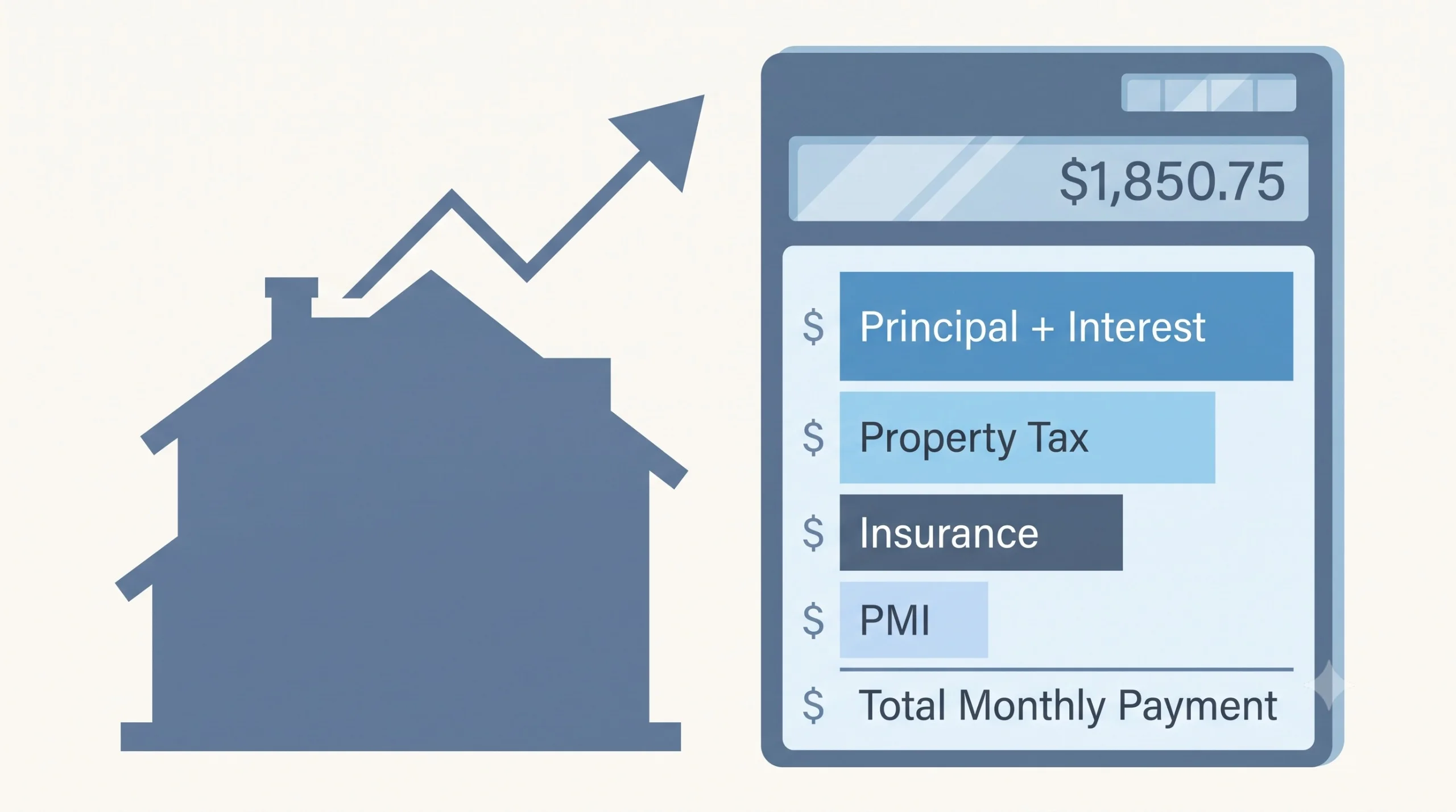
A mortgage payment is not just principal and interest. Most lenders collect four components in a single monthly charge, often called PITI. Knowing what each one is and which ones the calculator includes helps you read the result correctly.
Principal and Interest: The Core Payment
Principal is the portion of the payment that reduces your loan balance. Interest is the cost of borrowing expressed as an annual rate but charged monthly. In the early years of a 30-year mortgage, the split is heavily weighted toward interest. On a $300,000 loan at 6.8%, your first payment might be roughly $350 toward principal and $1,650 toward interest. By year 25, that ratio flips.
The standard amortization formula M = P[r(1+r)^n] ÷ [(1+r)^n − 1] is what the calculator runs behind the scenes. You do not need to work through it. You need to understand what it means: every month, interest is charged on your remaining balance, which decreases slightly, so each subsequent month, a little more of your payment goes toward principal.
The Costs Most People Forget to Include
Property taxes are typically collected monthly by your lender and held in escrow until the annual tax bill is due. In places with high taxes like New Jersey, Illinois, or Wisconsin, property taxes can tack on $400–$700 each month to the payment, kind of like a quiet extra fee. In lower-tax areas like Louisiana or Alabama, that same $300,000 home might end up adding only $150–$200 per month. Just don’t forget to include your state as well as your county tax rate when you do the math, because that’s really where it changes.
Homeowner’s insurance is usually required by the lender and often costs around $100–$200 a month for a median priced home. PMI, meaning private mortgage insurance, tends to kick in when your down payment is under 20%. It generally adds 0.5% to 1.5% of the loan amount annually, divided into monthly charges. On a $300,000 loan, that is $125–$375 per month until your loan-to-value ratio drops below 80%. A separate income tax calculator can help you understand how mortgage interest deductions affect your net annual cost.
Fixed vs. Adjustable Rate Mortgages: Which Should You Calculate For?
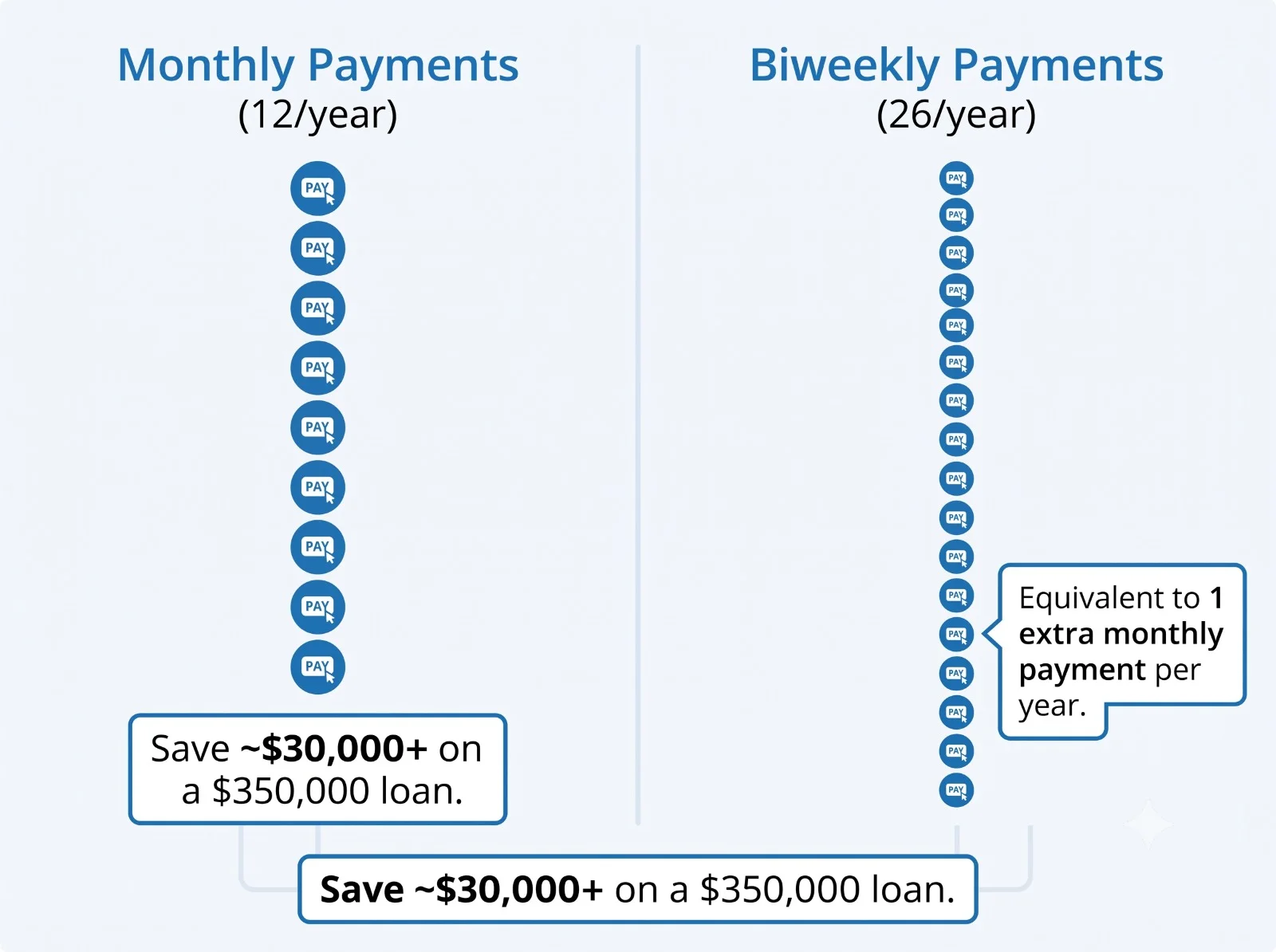
A fixed-rate mortgage keeps the exact same interest rate for the entire loan life, so for 15, 20, or 30 years, depending on what you choose. So your monthly payment really doesn’t shift because of rate movements. But that steady sense of control comes with a little bit of a fee. In most cases, fixed rates land about 0.25% to 0.75% higher than the starting rates you’d see with an ARM.
Now an adjustable rate mortgage, or ARM, usually begins with a fixed rate for an initial stretch, commonly 5 or 7 years, and after that it starts adjusting each year. Those changes are tied to a market index. The 5/1 ARM is the version people talk about most, it’s fixed for 5 years, then it resets every year after that. ARMs are lower to start, but they transfer rate risk to you. If rates rise after the fixed period, your payment rises with them and there is no cap on how high rates can go over the full loan term, only on year-to-year increases.
The mortgage calculator handles both scenarios. For an ARM, input the initial rate to see your starting payment. Use the loan calculator to see what the payment ends up looking like if the interest rate jumps to 8% or 9% after the adjustment period. Basically, that stress test shows if you can actually absorb the change without getting squeezed.
Biweekly vs. Bimonthly Mortgage Payments: A Difference Worth Knowing
These labels get tossed around like they’re the same thing. They are not. And the gap between them is kind of big, honestly.
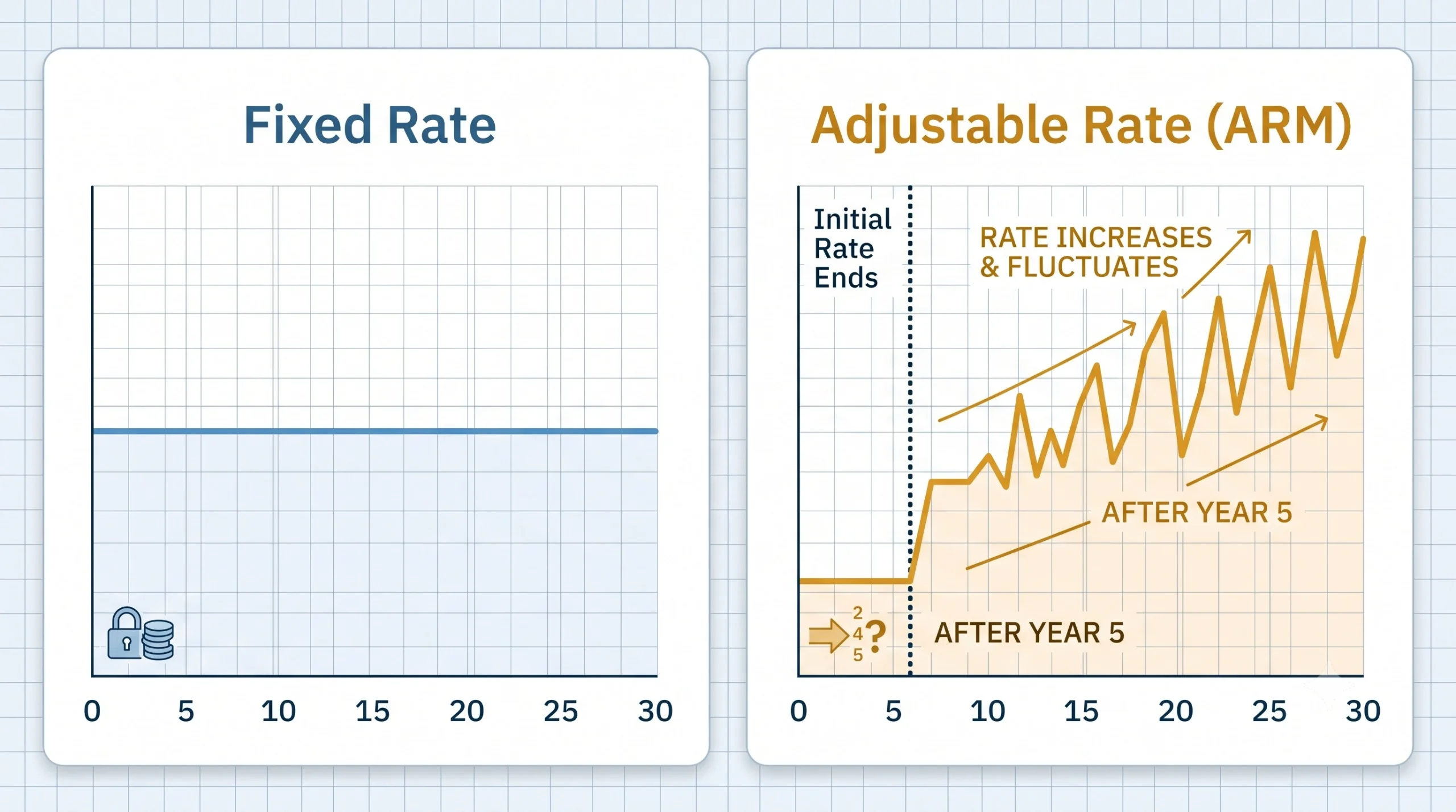
A biweekly mortgage means you make a payment every two weeks so that becomes 26 half-payments each year, which works out to 13 full monthly payments instead of 12. That “extra” payment, shows up every year and it all goes to principal. As a result, a 30-year loan can shrink by about four to six years. At an interest rate of 6.8% with a $350,000 loan, one could end up saving more than $60,000 throughout the entire life of the loan from interest alone.
The bimonthly mortgage requires you to make payments twice in each month, for instance on the 1st and 15th. Despite its resemblance to the other payment systems, the bimonthly system only entails making two half-payments in a single month or 24 half-payments in a year; hence, it translates to 12 payments per year. Therefore, there is nothing special about the bimonthly system regarding the extra principal and interest savings. Use the biweekly mortgage calculator to model the acceleration scenario; confirm the standard amortization with the core tool.
How an Extra Payment Changes Your Loan
Making even one extra mortgage payment per year has a kinda compounding effect because each extra dollar you put toward principal takes away the base where later interest gets calculated from. So on a $300,000 loan at 7%, making just one extra payment yearly can knock off roughly 4.5 years of payments and cut total interest by about $47,000 give or take.
You can model this in the calculator, by nudging the monthly payment upward so the extra amount is spread out across the 12 months. Or use the compound interest calculator to see what that same extra money would earn if invested instead — the comparison between mortgage interest saved and investment return is useful context when deciding whether to pay down the loan faster or invest the difference.
Recast Mortgage Calculator: What It Is and When to Use It
Recasting is one of the least-understood mortgage options and one of the most useful for homeowners who have received a windfall, sold a previous home, or received an inheritance.
When you do a mortgage recast, you basically send in one big lump-sum payment toward the principal, then the lender redoes the math on your monthly amount, based on the new lower loan balance, using the same interest rate and the remaining original time left. Unlike refinancing, recasting doesn’t really involve an appraisal, a credit check, or standard closing costs. Most lenders just tack on a simple flat fee, something like $150–$500.
The mortgage recast calculator is there to tell you what that new monthly payment would look like after you make the lump-sum principal hit. Like for example: if you’ve got a $400,000 loan at 6.5% interest with 25 years still remaining, you’re looking at a monthly payment of about $2,700. Now if you apply a $50,000 principal payment and recast, your new monthly figure falls to roughly $2,362, so you’re saving around $338 each month for the rest of the loan’s life, with no need to refinance.
Reverse Mortgage Calculator: How to Estimate What You Could Receive
In the reverse mortgage, money flows in the opposite direction from how it would flow in an ordinary home loan. You don’t pay back the lender to gain ownership of the property but rather collect money from the lender according to the equity that you have built. The amount of money owed increases with time and is paid off upon selling of the house, moving out, or death.
Only people above the age of 62 years are eligible for reverse mortgages. The amount you get is determined by the applicant’s age, value of the house, prevailing interest rate, and maximum lending limit set by the Federal Housing Authority. A reverse mortgage calculator estimates what you might receive each month, or how big your line of credit could be, using those inputs. There’s also a retirement calculator next to it, so you can picture if the reverse mortgage proceeds actually plug the gaps in your retirement income, or if other savings options would be more efficient in practice.
Manufactured and Mobile Home Mortgages: What's Different
Manufactured homes and mobile homes are not always able to get conventional mortgages. Whether you can use one depends a lot on two things, like: is the home sitting on a permanent foundation, and has the property title been switched from personal property over to real property. If you’ve got a manufactured home on a permanent foundation plus a real property title, it’s usually eligible for FHA, VA, or conventional financing, and yes a standard manufactured home mortgage calculator should work just fine. But if the place is on leased land, or the title is still treated like personal property, often called chattel, then you end up in different loan categories. Those usually come with higher interest rates and shorter payoff periods, commonly around 15–20 years instead of the more typical 30. A mobile home mortgage calculator generally behaves the same, but the inputs matter more, especially the interest rate, since the chattel loan market prices things differently. Rates are often about 1.5% to 2.5% higher than conventional mortgages. And if your lender is calling it personal property financing instead of a mortgage, then you can use the personal loan calculator as a kind of secondary sanity check, because the numbers should line up with that style of loan.
Common Mistakes When Using a Mortgage Calculator
Still, the most common slip I see is using the buying price only, instead of the actual loan amount. Basically that loan amount is the gap between the buying price and the down payment, and yeah that gap feels huge. For example, a home bought for $400,000 with a down payment of 15 percent is going to correspond to a loan amount of $340,000. If you do the estimate based on $400,000 anyway, you end up with an extra $450 per month.
The second common mistake is ignoring PMI. Many first-time buyers input a 10% down payment and forget to add the PMI cost. On a $350,000 loan, PMI at 1% annually adds about $292 per month until the balance reaches 80% of the original appraised value.
The third: using a rate from last week. Mortgage rates shift frequently, sometimes by 0.25% within a single week during volatile rate environments. Always use a rate you have been quoted by an actual lender, or the current national average from a published source like Freddie Mac's weekly survey. Running the calculator with a stale rate produces a number you cannot rely on when making purchase decisions. Explore the full range of calculators at EasyFreeCalculator.